
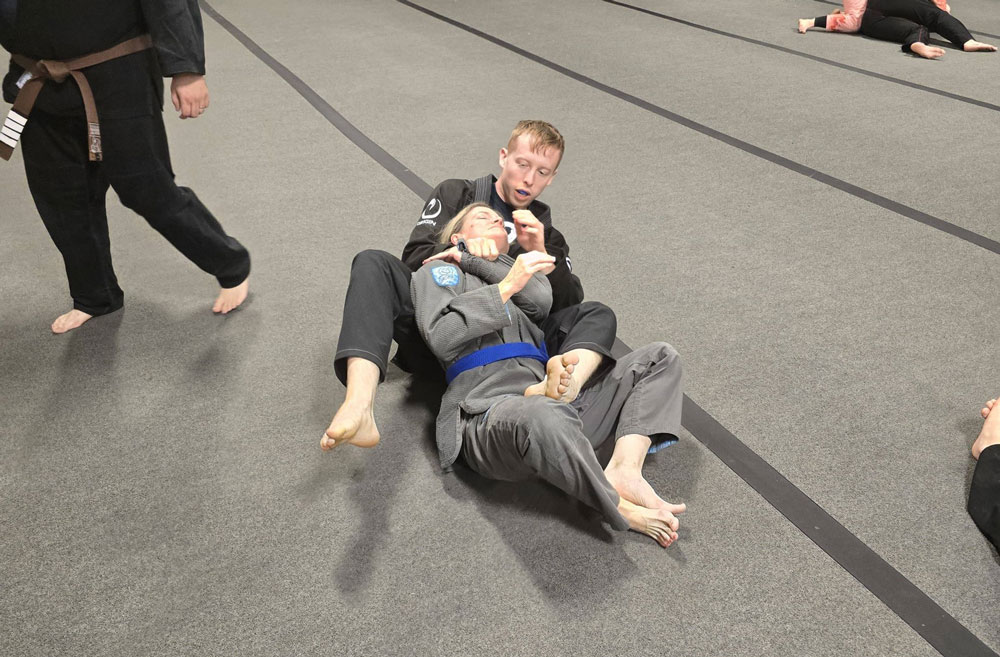
Brazilian Jiu Jitsu
Brazilian Jiu Jitsu (BJJ) traces its roots to traditional Japanese Jujutsu and Judo. In the early 1900s, Japanese judoka Mitsuyo Maeda traveled to Brazil, where he taught grappling techniques to Carlos Gracie. Carlos and his brother Helio Gracie began adapting the techniques, emphasizing leverage, timing, and technique so that a smaller person could defend against a larger opponent. Over time, their approach evolved into Brazilian Jiu Jitsu, a system focused on ground fighting, positional control, and submissions such as chokes and joint locks.
As Brazilian Jiu Jitsu grew in popularity, it spread throughout Brazil and eventually across the world, especially after its effectiveness was showcased in early mixed martial arts competitions. One of the most respected lineages in the art comes from the Machado family, cousins of the Gracie family who helped bring Brazilian Jiu Jitsu to the United States. Carlos Machado, a highly accomplished practitioner and instructor, became one of the leading figures in expanding BJJ internationally while maintaining a strong emphasis on technical precision, discipline, and respect within the art.
At The Forge Martial Arts Academy, students train under the Carlos Machado Jiu Jitsu affiliation, learning a structured system built on proven techniques and strong fundamentals. Classes focus on positional control, escapes, submissions, and practical grappling skills that build confidence and resilience on the mat. The Forge emphasizes a supportive training environment where students of all levels can develop discipline, problem solving, and the ability to stay calm and effective under pressure.